The Ruy Lopez Opening (Spanish Opening) C60
1. e4 e5
2. Nf3 Nc6
3. Bb5
What are the reasons for the moves?
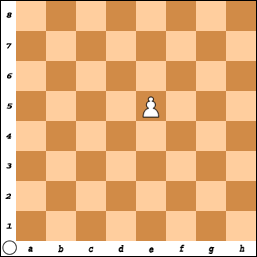
1. e4
- White stakes a claim the centre.
- This opens the diagonals for the Queen and the f1 Bishop.
1. … e5
- Black stakes a claim to the centre.
- This blocks the advance of White’s e-pawn.
- It stops White immediately playing d4.
- It opens the diagonals for the Queen and the f8 Bishop.
2. Nf3
- This develops a piece.
- Knights before Bishops.
- Towards the centre.
- The Knight’s best square – it is far enough from the edge/corner to have its full range of moves.
- It defends the h2 pawn – a likely target for Black if White castles Kingside.
- It threatens Black’s e5 pawn – so Black has to decide how to respond.
2. … Nc6
- This defends the threatened e5 pawn.
- It develops a piece.
- Knights before Bishops.
- Towards the centre.
- The Knight’s best square – it is far enough from the edge/corner to have its full range of moves.
- It is the best defensive choice.
(We looked at the alternatives in The Italian Opening)
Now:
3. Bb5 does not seem as threatening as 3. Bc4 of the Italian – but has become the most popular of the open openings (!) because players have learnt to defend against 3. Bc4. Although the threat is not immediate, it is lasting.
For example, if White exchanges Bishop for Knight on c6, Black’s e5 pawn loses its defender and can be captured for free. This is not too worrying – Black can easily get the pawn back.
More of a problem is that Black will want to move the d-pawn – which will leave the Knight pinned – if it moves, the King will be in check from the Bishop.
What does Black do now?
Option A
Morphy’s Defence – the most popular
3. … a6
This makes White make a decision about the Bishop immediately.
Usually White saves the Bishop with:
4. Ba4 rather than exchanging for the Knight on c6. C70
The main line continues:
4. … Nf6 C77
5. O-O Be7 C78, C84
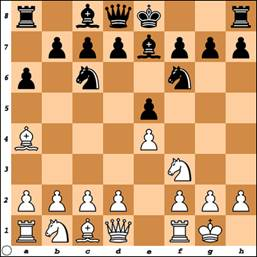
Notice how White has ignored the threat to the e-pawn from 4. … Nf6.
Black’s Bishop is less exposed than it would be on c5 – White’s plans will include occupying the centre with c3 then d4.
Black is ready to castle – and so break the threatened pin.
This is the Closed Variation of Morphy’s Defence C84.
White defends the threatened e-pawn with:
6. Re1
Black will also have to consider defending their e-pawn – if White exchanges on c6 (capturing the Knight which is defending it) it will be undefended. It is already attacked by the White Knight on f3.
Black drives the White Bishop off the a4-e8 diagonal with:
6. … b5
and it retreats:
7. Bb3
Black castles and White prepares for d4:
7. … O-O
8. c3
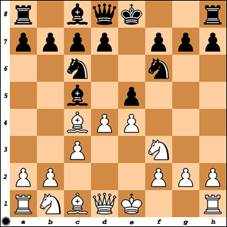
Notice that this last move of White’s also provides a retreat for the Bishop on b3 – otherwise if Black plays Na5 it is lost.
8. … d6
strengthens Black’s presence in the centre and opens up the c8-h3 diagonal for the Bishop.
9. h3
That opening up of the diagonal stops White playing d4 immediately. This move guards g4. Otherwise Black could play Bg4, pinning the Knight on f3 (to the Queen) and so stopping it supporting the pawn on d4.
This is the position we have reached:
And this would be the position after:
9. d4 Bg4
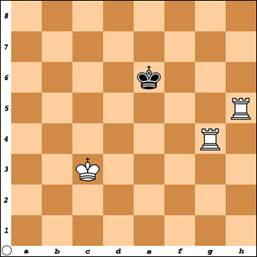
Option A (i) The Open Variation
Returning to the position after:
1. e4 e5
2. Nf3 Nc6
3. Bb5 a6
4. Ba4 Nf6
5. O-O

Why not carry out the threat posed by 4. … Nf6 and capture the pawn on e4? After all, White has not bothered to defend it but has castled instead.
5. … Nxe4
This is the Open Variation of Morphy’s Defence C80.
Black’s aim is not really to gain a pawn – White will get it back easily enough – but to get an active game.
We are now in this position:
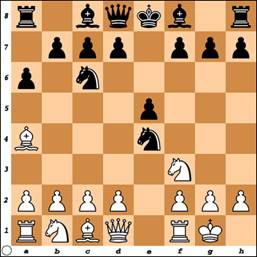
We expect play to continue:
6. d4 b5
7. Bb3 d5
8. dxe5 Be6
to arrive at:
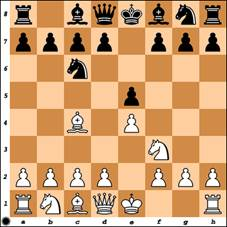
Black hopes to play Bc5 or Be7 and then castle.
White might play Nbd2 and perhaps c3 and Bc2 to try to dislodge Black’s Knight on e4.
Option A (ii) The Archangel Variation
Returning to the position after:
1. e4 e5
2. Nf3 Nc6
3. Bb5 a6
4. Ba4 Nf6
5. O-O
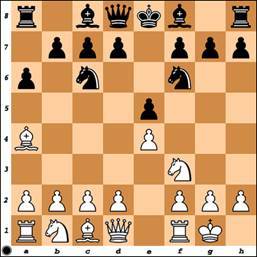
Play continues:
5. … b5
6. Bb3 Bb7
to arrive at this position:
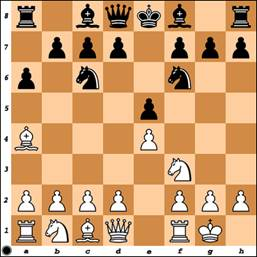
Black has pursued the White Bishop which has retreated from the a4-e8 diagonal – although it is now aiming at the weak pawn on f7!
Black is gambling that the fianchettoed Bishop on b7 will have enough influence on the centre and kingside to compensate for the delay in castling.
White can now defend the e-pawn with Re1 or aim at building a strong pawn centre with c3 and d4.
Black’s play is tactically justified by the ability to meet 7. Ng5 with 7. … d5 when 8. exd5 is met with 8. … Nd4!
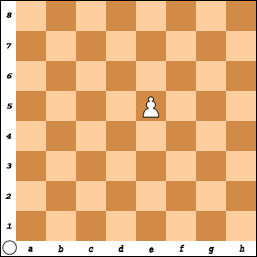
Those last two moves by Black would not both be possible without moving the White Bishop off the a4-e8 diagonal – look at how this has opened up.
It might be tempting to play 8. … Nxd5, but then 9. Qh5 g6; 10. Qf3 gives White an advantage:
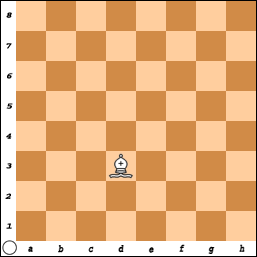
(The Knight on f6 was defending h5 against this Queen move – which threatens Qxf7#. Black’s g6 to drive the Queen away has weakened the pawn wall in front of the King – assuming castling – and White is still threatening Qxf7#!)
Option A (iii) The Marshall Attack
This possibility appears later, after:
Returning to the position after:
1. e4 e5
2. Nf3 Nc6
3. Bb5 a6
4. Ba4 Nf6
5. O-O Be7
6. Re1 b5
7. Bb3 O-O
8. c3

Instead of playing 8. … d6, Black plays 8. … d5:
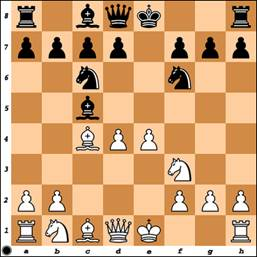
Play continues:
9. exd5 Nxd5
10. Nxe5 Nxe5
11. Rxe5 c6
In exchange for a pawn, Black is ahead in development. Look at all those White pieces tucked away on the queenside. And White’s castle has been weakened. Black will try to take advantage of this with moves such as Bd6 and Qh4.
Other ways of starting to defend against the Ruy Lopez
Continuing from:
1. e4 e5
2. Nf3 Nc6
3. Bb5
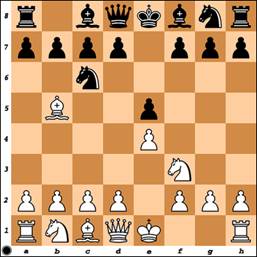
The Steinitz Defence (C62) Rarely played
3. … d6
usually followed by:
4. d4
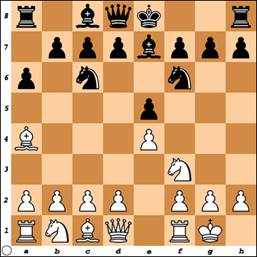
Black defends the e-pawn and prepares to develop the light Bishop – to g4 where it pins the White Knight or to d7, breaking the pin on the Black Knight.
Black’s dark Bishop usually goes to e7, the Knight to f6 and the King castles.
White has increased the pressure in the centre and intends to castle and play the Knight to c3.
White has a slight advantage due to the amount of space controlled.
The Classical Defence (C64) Rarely played
3. … Bc5
White should continue with:
4. O-O
and later play c3 and d4 to attack this Bishop.
The Berlin Defence (C65)
3. … Nf6 threatening White’s e-pawn.
White castles and Black captures this pawn with:
4. O-O Nxe4 (now the Open Variation C67)

White does not have difficulty recovering the lost pawn.
The following is a strong continuation:
5. d4 Nd6
6. Bxc6 dxc6
7. dxe5 Nf5
8. Qxd8+ Kxd8
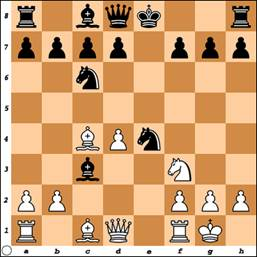
This used to be thought favourable for White – but the then World Champion, Garry Kasparov, could not get an advantage against Vladimir Kramnik in the World Championship match of 2000 – which Kramnik won.
So, you might opt for the more modest:
4. d3
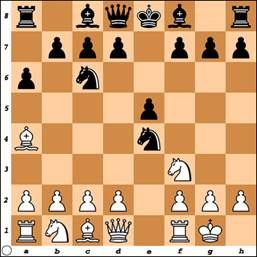
This avoids the exchange of Queens.
White plans: O-O; c3; Nbd2; Re1; Nf1; Nf3; d4.
It is worth noting that White can simply recover the pawn with:
5. Re1 Nd6
6. Bxc6 dxc6
7. Nxe5 Be7
Look carefully at the position after 7. Nxe5
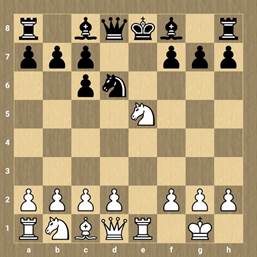
White threatens Nxc6+ (discovering check from the Rook on e1) – winning the Queen – so Black must defend against this!
The Schliemann Defense (C63) – for the aggressive player!
3. … f5
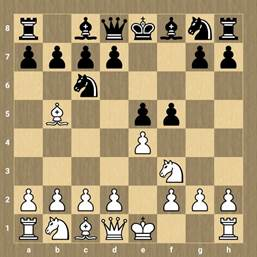
This is also known as the Jaenisch Gambit.
It can make life very complicated for White – especially if the offered pawn is captured.
White should avoid this with 4. d3 and follow up with Nc3.